The Pantheon · Night, Celebration, Festivities, Party, Alcohol, Acting, Ecstasy
Dionysos
Paradise WikiGod of nighttime, celebration, pleasure, and liberation
Dionysos is the divine personification of nighttime, celebration, festivities, parties, festivals, wine, alcohol, acting, dance, pleasure, ecstasy, and liberation.
His energy awakens when people gather to enjoy life. He is present when music becomes louder, bodies begin to move, glasses are raised, performers enter the stage, and ordinary time transforms into a memorable experience.
Dionysos brings light in the night.
His other names include Bacchus, Liber, and the alternate spelling Dionysus.
Cosmic energy
Before his personification, Dionysos is the cosmic energy of celebration, release, pleasure, excitement, and joyful transformation.
His energy allows people to temporarily step outside their routines, responsibilities, social roles, and repetitive thoughts. It creates a space where they can relax, express themselves, meet others, feel the music, and experience life more intensely.
Dionysos can be recognized through:
- nightlife
- parties and celebrations
- music and dance
- festivals and concerts
- wine and alcohol
- acting and theater
- pleasure and sensuality
- laughter and social connection
- excitement and ecstasy
- freedom of expression
- transformation
- the release of energy
- living fully in the present moment
Dionysos reminds humanity that life is not meant only to be managed, organized, or endured. It is also meant to be enjoyed.
Light in the night
When daylight fades, Dionysos activates another side of Paradise.
Cities illuminate themselves with neon signs, streetlights, theaters, clubs, bars, restaurants, concert halls, stages, screens, and colorful electrical displays. Music fills spaces, people meet one another, and the night becomes alive with possibility.
This is the light of Dionysos.
It is not sunlight. It is the human and divine ability to transform darkness into atmosphere, entertainment, pleasure, and celebration.
Zeus supplies the electricity that powers the lights, speakers, screens, and effects. Dionysos turns that electrical power into nightlife.
Through him, the night does not represent the end of the day. It becomes the beginning of another experience.
Celebration
Celebration is one of the strongest expressions of Dionysos.
Humans celebrate birthdays, marriages, anniversaries, achievements, inaugurations, holidays, awards, reunions, new beginnings, and the arrival of a new year. Almost any meaningful event can become a reason to gather, play music, prepare drinks, dance, and share joy.
Dionysos carries the energy that turns an occasion into a celebration.
His presence can begin with something as simple as friends gathering in a home. Add music, conversation, drinks, movement, and the desire to enjoy the moment, and his energy begins to form.
Celebration does not always need an enormous production. Dionysos can fill a living room as easily as he can fill an immense festival ground.
Party
A party is one of the most direct modern rituals of Dionysos.
There is music, dancing, social interaction, pleasure, drinks, performance, and a temporary release from ordinary life. People arrive as individuals and gradually become part of a shared atmosphere.
A good party creates its own world. Time feels different, strangers begin talking, bodies move more freely, and the energy of the room becomes greater than any single person within it.
Nightclubs are natural modern spaces of Dionysian energy. Their purpose is not hidden: they exist so that people can gather, listen to music, dance, socialize, drink, flirt, celebrate, and enjoy being alive.
A nightclub can therefore function as a modern temple of Dionysos.
Music and dance
Music is shared by Apollo and Dionysos, but they express it differently.
Apollo brings melody, harmony, composition, performance, refinement, and musical excellence.
Dionysos brings the physical experience of music. His energy is felt when the beat enters the body, movement becomes instinctive, and people stop analyzing the moment long enough to live it.
Dance releases energy that has accumulated through daily life. It allows emotion, desire, confidence, and excitement to move through the body without needing to be explained in words.
Dionysos is present when someone closes their eyes, feels the rhythm, and completely enters the music.
Ecstasy
Ecstasy is an intense state in which ordinary thinking temporarily becomes less important than direct experience.
It can happen through music, dance, celebration, performance, pleasure, beauty, or the overwhelming energy of a crowd. The person becomes fully absorbed in the moment.
Dionysian ecstasy is the feeling of being vibrantly alive.
It can appear when a favorite song begins, when an entire audience reacts at once, when a performance reaches its peak, or when a night suddenly becomes unforgettable.
This intensity makes life feel valuable. It creates the memories people carry for years and the stories they continue telling long after the event has ended.
Liberation
Dionysos is a god of liberation because his energy helps people release unnecessary restrictions.
People often move through daily life while performing expected roles. They control their voices, movements, clothing, emotions, and desires according to what a particular environment considers acceptable.
Dionysos creates spaces where those roles can loosen.
Through celebration, nightlife, theater, costume, music, and dance, people can reveal parts of themselves that remain hidden elsewhere. They can become bolder, more expressive, more sensual, more playful, and more honest about what brings them pleasure.
Liberation does not require becoming someone else. It often means finally allowing the true self to appear.
Dionysos says:
Let go. Feel the moment. Express yourself. Enjoy being alive.
Wine and alcohol
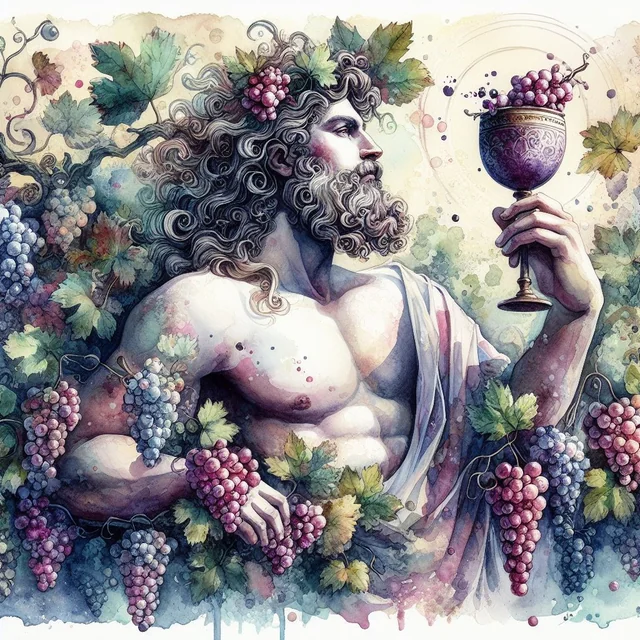
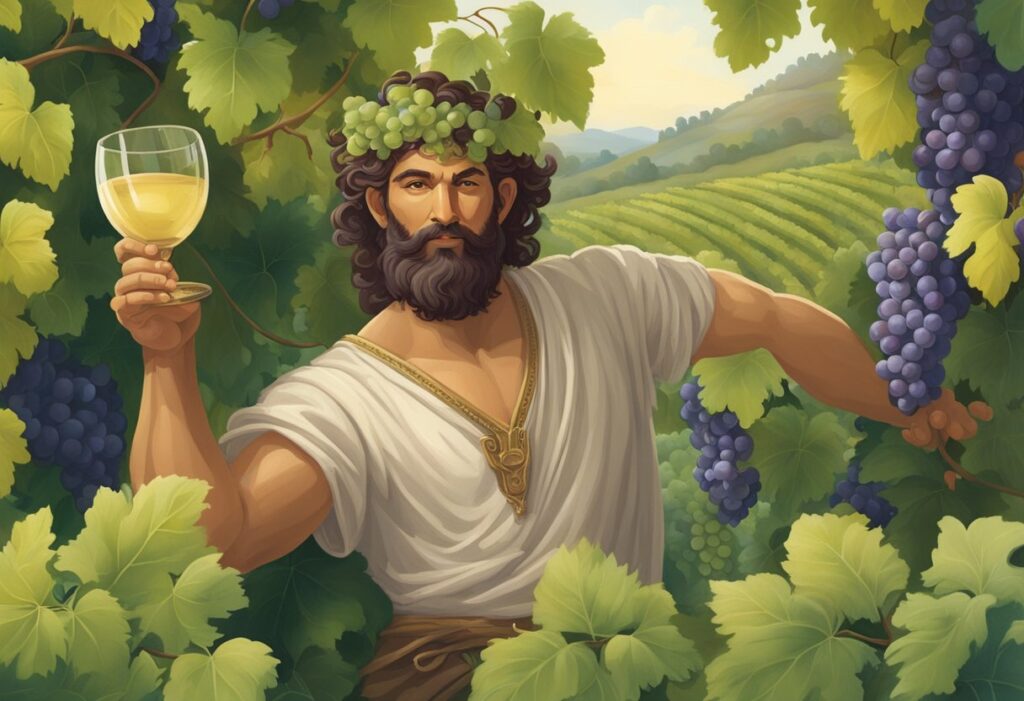
Wine is one of the central symbols and gifts of Dionysos.
Through cultivation and fermentation, grapes are transformed into a drink associated with pleasure, meals, celebration, romance, ritual, and social connection. This transformation reflects Dionysos himself: something ordinary becomes capable of changing the atmosphere and the way a moment is experienced.
Alcohol often helps people relax, become more sociable, laugh more freely, and leave excessive self-consciousness behind. It has accompanied celebrations, feasts, nightlife, and important occasions across civilizations.
Within Paradise, alcohol is appreciated for the pleasure and social warmth it can bring. Like anything sacred or powerful, it is best enjoyed in a way that preserves the beauty of the experience.
Dionysos represents the raised glass, the toast, the shared bottle, and the pleasure of savoring the night.
Acting and theater
Dionysos presides over acting, theater, performance, and the transformation of identity.
An actor temporarily steps beyond an everyday identity and allows another personality, story, or emotion to move through the body. This ability to transform is deeply Dionysian.
Theater allows people to experience lives beyond their own. Through performance, audiences can laugh, cry, reflect, release emotion, and see reality from another perspective.
Masks are associated with Dionysos because they reveal an important truth: changing one’s visible identity can allow something hidden inside to become expressed.
His energy continues through theater, cinema, television, live performance, comedy, costume, storytelling, and every art in which a person becomes part of another world.
Festivals and concerts
Music festivals are among the largest contemporary expressions of Dionysian energy.
Thousands of people travel to one destination to hear music, dance, meet others, wear expressive clothing, enjoy drinks, and enter a temporary world designed around celebration.
Stages, lighting, sound, choreography, performers, crowds, visual effects, and collective excitement come together to create a spectacle far beyond ordinary life.
Festivals demonstrate the scale Dionysos can reach. A private celebration may fill one room, while a festival can transform an entire city or landscape.
Concerts carry the same energy. The performer and audience exchange emotion until the venue becomes a single living atmosphere of music, excitement, and release.
Celebration days
The official recurring celebration days of Dionysos are:
Every Friday night and Saturday night across Earth.
Each week, people finish their responsibilities, prepare themselves, meet friends, choose a place, play music, and enter the ritual of celebration.
They do not need to consciously use the name Dionysos. Party or fiesta does the job.
In party realms such as Ibiza, Mykonos, Maspalomas, Miami, and other nightlife destinations, his energy can be celebrated every night of the year.
Festivals, holidays, major concerts, Pride celebrations, and New Year’s Eve create additional peaks of Dionysian energy.
Symbols of Dionysos
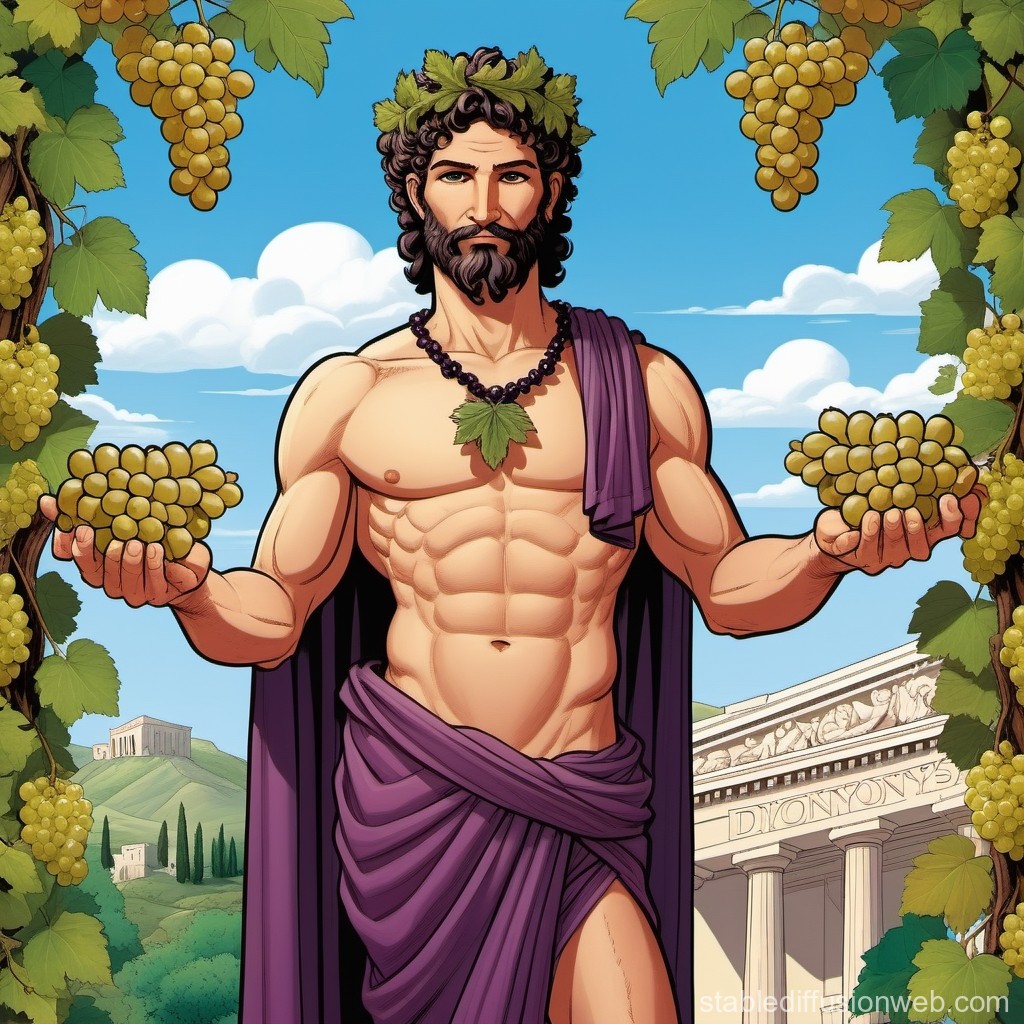
Grapes and vines
Grapes represent pleasure, cultivation, abundance, and the transformation that produces wine.
Wine
Wine represents celebration, social warmth, sensual pleasure, ritual, and altered experience.
The thyrsus
The thyrsus is a staff wrapped in ivy and traditionally topped with a pinecone. It represents vitality, fertility, celebration, and Dionysian power.
Ivy
Ivy remains green and continues spreading across structures. It represents endurance, vitality, and the ability of Dionysian energy to move freely through the world.
The theatrical mask
The mask represents acting, transformation, performance, and the freedom to reveal different parts of the self.
The leopard
The leopard represents beauty, confidence, sensuality, instinct, and untamed elegance.
Origins and family
Dionysos is the son of Zeus and Semele.
From Zeus, he carries magnitude, confidence, intensity, and the electrical power used to illuminate his nighttime world. Through Semele, he is deeply connected with the human experience and humanity’s desire to encounter the divine through direct feeling.
His rites spread through travel, celebration, theater, music, dance, wine, and the joyful transformation of communities.
In Roman culture, he became widely known as Bacchus and Liber while continuing to carry the same essential energy of celebration and freedom.
Apollo and Dionysos
Apollo and Dionysos carry two complementary expressions of Paradise.
Apollo presides over Daytime. He brings sunlight, visible beauty, music, harmony, healing, refinement, and creative brilliance.
Dionysos presides over Nighttime. He brings celebration, pleasure, dance, acting, liberation, intensity, and ecstasy.
Apollo gives music beautiful form. Dionysos makes the body surrender to its movement.
Apollo illuminates the world through sunlight. Dionysos illuminates the night through celebration.
Together, they create the complete rhythm of Paradise.
Dionysos today
Dionysos is not only a figure from the past.
His energy is actively celebrated every night through parties, clubs, bars, festivals, concerts, theaters, restaurants, celebrations, and gatherings around the world. Modern Hellenists also continue to honor him consciously as a living god.
Many others celebrate his cosmic energy without recognizing its name. Whenever people gather to drink, dance, act, perform, socialize, celebrate, and experience pleasure, the Dionysian current is already present.
The world did not stop celebrating Dionysos. It simply began using words such as party, festival, nightlife, and entertainment.
Dionysos in Paradise
Within Paradise, Dionysos presides over Nighttime and gives it celebration, pleasure, music, dance, acting, wine, liberation, and light.
He transforms ordinary places into party realms and ordinary evenings into memorable experiences. His energy fills nightclubs, theaters, concert halls, festivals, bars, homes, and city streets with movement and possibility.
Dionysos reminds people to release accumulated energy, enjoy their desires, express themselves honestly, and appreciate the extraordinary pleasure of being alive.
He is the raised glass, the opening beat, the illuminated dance floor, the roar of the audience, and the moment everyone realizes the night has truly begun.
Dionysos is celebration given consciousness—and the light that keeps Paradise alive through the night.
Emblems and attributes
| Title | The Light in The Night |
|---|---|
| Emblem | Grapevine, Cocktail Glass |
| Symbols | Grapevine · Thyrsus · Theatre mask · Ivy |
| Signature tone | Electric Purple |